
Laguna Brava Expedition
Leave the typical tourist paths entirely behind. Hike through crisp mountain air to discover the hidden, clear waters of Laguna Brava enclosed by quiet, tall ridges.
A Glimpse of Paradise.

The Laguna Brava Expedition takes you deep into western Guatemala’s wildest corner. Over six days you journey from the ancient Maya pyramids of Zaculeu to panoramic highland lookouts, then down to the turquoise lakes, cenotes and sinkholes that are a hallmark of the region. Along the way you’ll weave through the Sierra de los Cuchumatanes, Central America’s highest non-volcanic mountain range, known for its vast skies, crisp air and the enduring Maya culture that still shapes the landscape.
Long revered by National Geographic, Guatemala’s Western Highlands are a stronghold of living Maya culture and the Laguna Brava Expedition is your chance to experience it for yourself – think viewpoints like Juan Diéguez Olaverri, community-managed trails to Puerta del Cielo and small family kitchens serving up home-cooked highland meals after a long day’s hike.
You start in Zaculeu, a Mam Maya city whose name means “white earth” and whose temples you can still see in all their pristine white glory after a restoration project. Later on you find yourself standing at the Mirador Juan Diéguez Olaverri, where a famous 19th-century poem to the Cuchumatanes is carved into stone – and on clear days you catch a glimpse of a chain of volcanoes on the horizon. Over the next few days you’ll explore Laguna Brava, its nearby cenotes, the stunning pools of Candelaria and the heart-stopping El Cimarrón sinkhole before looping back to Huehuetenango – and the city.
Laguna Brava
A piece of heaven
Cenotes de Candelaria
The underwater escape
Laguna Brava
The hidden turquoise jewel
Los Cuchumatanes
Where the peaks touch the sky
Highlights
On the Laguna Brava Expedition, you’ll get to see quite a few different places – not just a couple of stops along the way. First up is Zaculeu – an ancient Mam Maya city perched on a strategic ridge with a backdrop of white-plastered pyramids and broad plazas. You can stand at the Mirador Juan Diéguez Olaverri and Café del Cielo, where a famous poem has been carved into the stone, and where on a clear day you can see for miles out over a line of distant volcanoes – all while sipping hot chocolate to warm your bones on a chilly evening. Then there’s the hike up to Puerta del Cielo – a high-altitude spot that’s home to some rare Guatemalan fir trees and offers simply stunning views out over the Cuchumatanes mountains.
While in the Nentón area though its all about water and limestone for you. You will pay a visit to Laguna Brava – a long, turquoise lake that’s fed by subterranean streams and home to some remote Maya communities, and head to the Cenotes de Candelaria – two deep, circular pools with crystal clear water where you can swim or just relax. You will wander up to the rim of El Cimarrón – a massive dry sinkhole with vertical rock walls and a hidden forest hidden away down in the bottom.
Itinerary
You leave Guatemala City or Antigua and head west towards the highlands, with a stop at Zaculeu: a pre-Columbian Mam Maya city whose name means “white earth”. The site sits on a natural plateau above the Seleguá River – a pretty defensible spot, even back in the day. Many of the 43 structures have had a layer of white plaster reapplied, so you can really get a sense of what the temples and plazas looked like back in the day.
You spend a bit of time wandering round the main plazas, climbing the pyramids for views of the surrounding hills and getting a feel for how Zaculeu managed to resist the Spanish conquest for so long. You also get to see the interesting mix of Mam and Mexican architectural styles that are on show. It’s usually a pretty quiet place, so you have plenty of time to take your photos and explore at your own pace.
In the afternoon you carry on up into the Sierra de los Cuchumatanes and reach Mirador Juan Diéguez Olaverri, one of the best viewpoints in the highlands. The lookout sits at a pretty high altitude on the road to Todos Santos Cuchumatán and is named after a local poet whose beautiful verses to the Cuchumatanes are carved into stone slabs on the site. On a clear day you can see for miles – even the volcanic chain on the horizon.
Next door to the viewpoint you stop in at Café del Cielo, a tiny café-restaurant known for its panoramic windows and pretty chilly evenings. You can warm up with a hot chocolate or a cup of local coffee while you watch the light change over the valley of Huehuetenango. After sunset you head back to a rural inn in or near Huehuetenango for the night.
- One night in a Rural Inn in Huehuetenango
Today you venture even deeper into the Cuchumatanes for a hike at that legendary lookout Puerta del Cielo. This whole area lies on a high plateau north of Huehuetenango and is looked after by local families as a community project aimed at sustainable tourism. It’s here that you’ll find cloud forest and important stands of pinabete, a Guatemalan fir that’s now sadly endangered.
You trek along marked paths through damp forest, step across natural rock formations and pass by big boulders that just happen to make perfect viewpoints. And from the top you get a real treat – you’re treated to breathtaking views of deep valleys and rolling hills that just go on for miles. Your guide points out all sorts of native plants, explains why this zone is so important for water supplies and shares local stories about its significance for traditional ceremonies. After the hike you carry on by vehicle towards Nentón and spend the first of three nights in basic but lovely rural accommodation in the Laguna Brava area.
- Two nights in the Laguna Brava area
Today is all about getting to grips with Laguna Brava, also known as Yolnabaj or Ownhajab in local Maya tongues. The lake is situated in some pretty wild karst country right near the Mexican border and is just one of the many lakes and lagoons to be found in this part of the world. The water’s got a gorgeous turquoise tinge to it due to the minerals in the limestone and the way it’s fed by underground and surface water.
You spend the day visiting viewpoints that give you a real sense of the lake’s scale and then you head down to the water’s edge. Depending on conditions you might even get to take a little paddle boat ride to get a feel for just how peaceful and remote this place feels. People are often amazed by how clear the water is and how the colour changes with the light. You also get to hear how the local communities are starting to get involved in some small, controlled tourism projects as a way of earning extra cash, while still keeping fishing and farming as their main activities. Later in the day you head back to the same accommodation in the Laguna Brava area.
Today is the day you explore the Cenotes de Candelaria, which are a real treat and are located in the hills near Nentón. These cenotes are massive circular sinkholes in the limestone rock, filled with water of a lovely blue-green colour and surrounded by steep rock walls. Locals will tell you that they’re some of the most impressive natural pools in the whole of Huehuetenango, but they’re still relatively off the beaten track due to the rough road in.
You take a short walk up to viewpoints along the rim and then use some pretty simple paths to reach the water’s edge. Here you can swim, take some great photos of the changing colours on the surface and just chill out on some big rocks around the pool. The cenotes are linked up to the Río Jordán and to underground water flows, so the level and colour can change a bit depending on the season. While you’re there, your guide will explain how these formations are created by the gradual collapse of limestone caves and how local communities are coming to see them as a natural attraction worth preserving. You head back to your lodge in the Laguna Brava area for a final night in this beautiful region.
Day 5 is when you visit El Cimarrón, one of the most dramatic sinkholes you’ll find in all of Guatemala. This place is often called a cenote, but geologists give it a more specific name – it’s a tiankeng, which is a very deep, almost perfectly circular pit with steep rock walls and forest at the bottom. In fact many people think it’s one of the deepest sinkholes in the whole country. Photos just don’t do it justice.
You take a short trail to reach the rim, then walk along some safe sections of the edge. From up here you can take in the view of the forest canopy way down below, where trees look like tiny dots. Birds circle around the rock walls and you can even feel a cool breeze rising from the depths. Your guide will share some of the local stories and legends surrounding this place – it’s a real treat. After a bit of time for photos and taking it all in, you head back to Huehuetenango by vehicle and spend the night at a rural inn for your final night in the highlands.
After a relaxed breakfast you’ve got a nice and easy morning in or around Huehuetenango. You might fancy a short walk to get one last view of the Cuchumatanes or a simple coffee in town. It’s a great moment to look back on the contrasts of the Laguna Brava Expedition – temples, high-altitude lookouts, turquoise lakes, cenotes and deep sinkholes. Later you head back to Antigua Guatemala or Guatemala City, where your Laguna Brava tour comes to an end.
map, expenses & price
Laguna Brava Expedition
Expenses included:
-All private transportation.
-Five nights of accommodations in Rural Inns.
-Tours and excursions as listed.
-All park entrance fees.
-Professional local guides.
-Two traditional lunches.
-Daily breakfast.
add-ons
ADD-ON
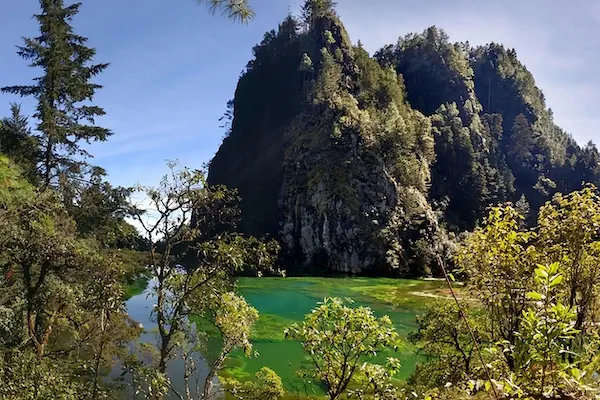
You can consider adding on a full day to visit Laguna de Magdalena, a bizarrely beautiful high-altitude lake near Chiantla in the upper Cuchumatanes. Nestled in a cold, misty basin surrounded by pines and open pastures, it’s situated at one of the highest points of your entire trip. This altitude means the climate is chilly even at peak midday, and you can expect light drizzle or fog rolling in – giving the place a sombre, isolation vibe that’s pretty unique.
You’ll get to wander along simple trails around the lagoon, stop off at tiny viewpoints and learn about the area’s wildlife conservation efforts from local organisations. You can see how water from the lagoon feeds small streams and how highland families use the surrounding pastures for grazing. With birds, wildflowers and waterfalls adding to the mix, it’s a great option if you enjoy wide open spaces and want to just slow down on the Cuchumatanes plateau for a day.
add-on
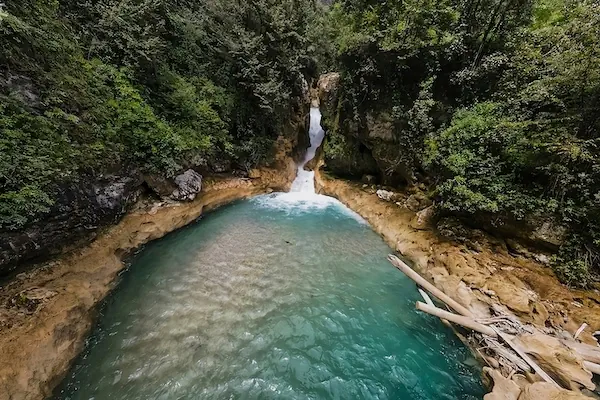
The Laguna Encantada and Río Quisil add-on gives you a whole different side of Huehuetenango – the warm, lower valleys with clear water, waterfalls and pools.
Laguna Encantada is a tiny but seriously pretty blue lagoon that’s fed by the Jolotes and Pepajau waterfalls, which then drain off into the Río Quisil. Because fresh water is constantly on the move through here, the lagoon keeps a super bright, super clear colour to it most of the year. Local legend has it that the lagoon used to “disappear” in older times when a big tree fell into it, which is how it got its “enchanted” name.
You can take a leisurely walk around the lagoon, sit on a rock near the water coming in and take a refreshing dip when conditions allow. Downstream along the Río Quisil you’ll find more little pools, cascades, caves and viewpoints with names like Sendero Ecológico, Los Encuentros and Piedra Lisa – all tied to local community projects. This is a great option if you’re after one more day of easy walking and some natural swimming spots to round off the main Laguna Brava Expedition.
add-on
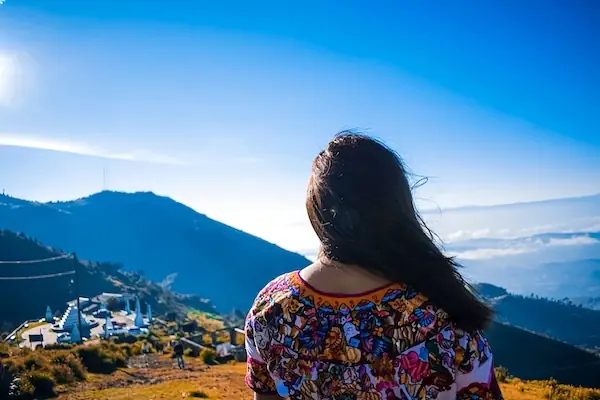
An alternative add-on is a full day in Todos Santos Cuchumatán and its Regional Park. This tiny town is one of the best places in Guatemala to get yourself immersed in living Mam culture. You can still spot men dressed in traditional red and white striped trousers and embroidered shirts as you wander through the streets and markets, and Mam is widely spoken by the locals.
The town of Todos Santos is pretty famous for its All Saints Day horse racing – a truly unique celebration that mixes devotion with colour and local custom. You start off with a strolling visit to the main square, church and market, where you can browse hand-woven textiles, highland crops and simple local dishes.
Later you head into the Todos Santos Regional Park and nearby trails. These hikes take you right up into the high prairies and rocky outcrops of the Cuchumatanes, where you can walk above the treeline and see wide views over the mountains and deep valleys – some historians reckon this region might even be the birthplace of the Maya languages, which adds an extra layer of meaning to the landscape. This is a good option if you want to get out for a big, full-day hike with some serious cultural immersion.


