
The Mayan Trail Trip
Follow the sacred paths of the ancient Maya. This trip takes you into the dense forest to explore breathtaking Mayan cities, nature wonders and the living local culture.
21-day trip to Mexico, Guatemala, Honduras and Belize.
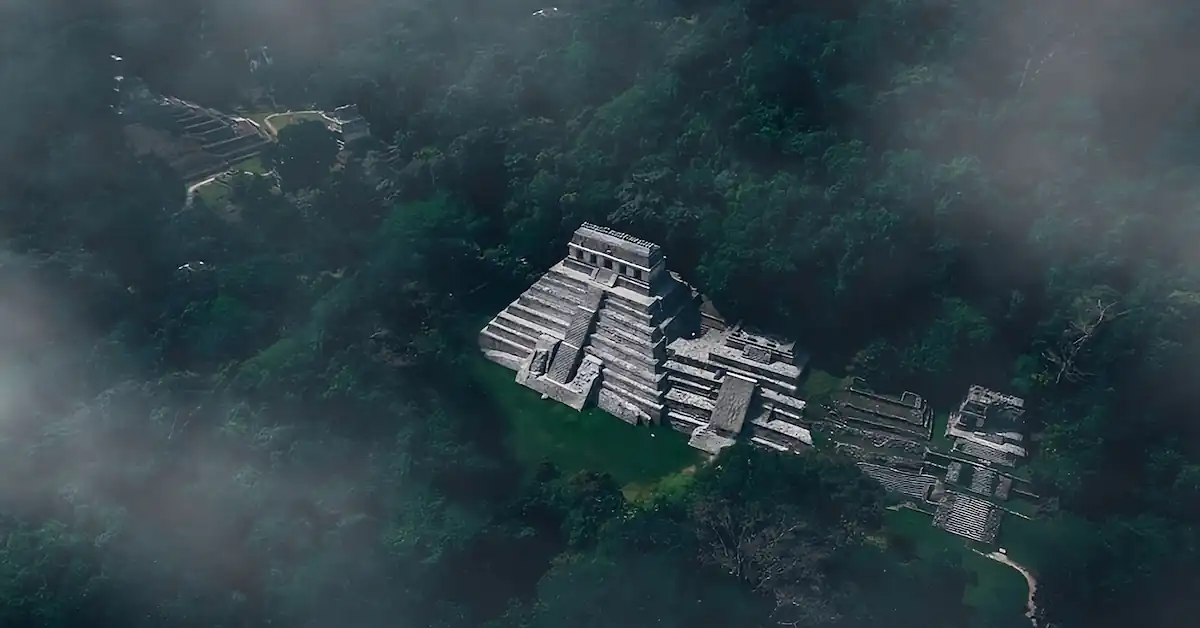
The Mayan Trail trip – that’s what this is, a single narrative that makes sense as a far-reaching journey. You kick off on the Caribbean coast of Mexico, then head inland into Yucatán where these ancient Maya cities just seem to rise out of nowhere from the limestone ground. And here’s the thing – the region’s hidden waterways aren’t just some tacked on afterthought, they’re actual water systems – cenotes – made visible to the world. From there, the path starts to twist into greener, more rugged terrain – the fortified town of Campeche, some seriously remote jungle sites and the dramatic Chiapas landscapes that break up the archaeology with waterfalls and majestic canyon walls.
Then the trip takes a fabulous turn. Guatemala brings the trip to life with its vibrant human texture – cruising around Lake Atitlán by boat, and walking through the streets of Antigua. Before long you’re in Honduras, and suddenly you’re face to face with Copán’s sculpture studded ruins.
And then there’s Belize – a more low-key adventure, where you arrive at a hilltop site by hand-cranked ferry, explore those caves that the Maya used to treat as sacred spaces, and float down a river to Lamanai in what feels like the “right” way to arrive. The whole thing is carefully paced – only an early start if it really adds to the day, and enough gentle afternoons that you can actually enjoy them, rather than just existing in a state of foggy, rushed exhaustion. You’ll see a lot, but it won’t be a blur of rushing from one place to another.
Calakmul
Where history rises from the jungle
Cenotes
Nature’s masterpieces in Yucatan
Lamanai
Spectacular setting
Rio Dulce
Where the river meets the ocean
Highlights
You get a real taste of just how all over the place the Maya world is in all its glory . At Chichen Itza you can just about smell the politics – every bit of it is carved into stone, with big ceremonial spaces and buildings that seem to be there just to wow the crowds. Uxmal on the other hand is all about refinement – almost overly ornate with some of the most beautiful facades you ever laid eyes on. And then there’s Calakmul which couldn’t be more different – a tiny remote outpost that’s basically (still) being reclaimed by the jungle. Palenque has got to be the posh bit of the trip – temples where the history is literally carved into the walls, and still influences how we see the Maya dynasties .
But then you hit Guatemala and suddenly everything gets flipped on its head. Lake Atitlan is like a live injection of local culture and landscapes that don’t need any fancy camera filters to make them look good. Then there’s Antigua, a city that was built by the Spanish but also had to be constantly rebuilt after those earth shattering earthquakes – you’d never guess the whole city had been knocked about like that. Copan is where the Maya really let their hair down and show off their sculptors – it’s the most human-looking place you’ll visit – the stelae and inscriptions are chock full of character. And then last but not least, Belize brings the trip full circle in all the right ways – a hand-cranked ferry ride to Xunantunich, a river trip to Lamanai and a proper ‘is this even real?’ cave experience.
Itinerary
You land at Cancun International Airport (CUN), meet our guide, and get checked in near the Caribbean coast. Keep it simple: get your bearings, take a walk along the water, and then just get some rest when your body tells you it’s time.
Cancun’s got a pretty modern story (it was actually built as a resort city), but the geography is ancient and dramatic: you’re on a sliver of land between the open Caribbean and a lagoon system, which is why the light can be so intense – all that water reflecting off the other water.
- One night in Cancun
You get to Chichen Itza early when it’s still cool and easy to take in. Your guide takes you through the ceremonial bit and they give you enough background to make it all click: El Castillo anchoring the main plaza, the Great Ball Court with its imposing scale, the Temple of the Warriors and its forest of columns, and El Caracol which is this strange but fascinating round structure that’s always linked to astronomical observations.
One little thing that’s pretty cool in person: the famous equinox “serpent shadow” effect isn’t some cheesy show put on by the locals. It’s just some deliberate design tied to seasonal timekeeping – architecture that worked as a calendar that you could actually stand inside.
After all that, you cool off at Cenote Yokdzonot – this deep, open sinkhole with a proper way down and clear water that just feels like the perfect reset. It’s a nice, unhurried vibe – more “take your time” than “move along”.
Then on to Merida where the best thing to do is just get out and about. Take a stroll around Plaza Grande, the Cathedral of San Ildefonso and the Casa de Montejo facade and you get a pretty quick sense of the city’s quiet confidence. What’s also worth noting is that Merida sits on top of older layers – parts of the colonial city actually reused stone from earlier Maya settlements, so even the “Spanish” streets are carrying older history right under your feet.
- One night in Merida
You begin with two very different cenotes. Dzombacal feels like stepping into a cave – cooler air, darker water, and that slow drop into limestone shade. X’batun is a whole different vibe: bright and open, a place to unwind where you’ll probably end up sticking around for a lot longer than you planned because it’s just so darn easy.
In the afternoon you explore Uxmal, one of the most visually stunning Maya cities in Mexico. You’re going to spend time at the Pyramid of the Magician, the Nunnery Quadrangle – heaven for architecture buffs – the long sweeping lines of the Governor’s Palace, and little details like the House of the Turtles where the carved stone turtles are so small you’d probably miss ’em if someone didn’t point ’em out.
Uxmal’s got a pretty cool trick up its sleeve: parts of the site line up with Venus cycles – and it’s not just a pretty face. For the Maya, Venus was all about timing, omens, and making major decisions.
Next you head to Campeche, a Gulf port city built with walls as much for a very practical reason – piracy was a major part of life here for generations.
- One night in Campeche
In the morning you will explore Campeche. It is one of those places that looks super cute at first, but then you realise it’s actually built to defend itself. Your walking tour begins in the historic centre around the Plaza Principal and the Cathedral, then you follow the edges where the fortification story really comes to life: bits of the city wall, the old gateways (especially Puerta de Tierra), and one of the bastions where the city used to position cannons to keep an eye on the bay. From up high the layout starts to make sense – compact, strategic, designed to keep control.
There’s a lesser known layer to Campeche too – the region’s trade wasn’t just about ships and silver. For a long time Campeche was also a big player in the logwood (palo de tinte) game – that’s a dye source that was historically used to colour textiles. It’s a great detail in a city where colour now really defines the streets.
Afterwards, we will leave behind the sea air for forest and end up at Becán, a site that feels different straight away. Before you even get to the central plazas you’ll be crossing a big trench that loops round the core – that’s often described as a moat. It’s unusual in the Maya world and gives the city a pretty fortress-like vibe.
Inside you explore the main plazas and temple clusters: pyramid-temples, broad platforms, and palace-style structures where narrow doorways and vaulted rooms give away the elite spaces. Climbing one of the main pyramids is a highlight – not just for the view, but because you can see how that trench wraps the ceremonial core like a deliberate boundary.
People love Becán because it doesn’t feel like a place that’s been overly polished. It feels like a real city footprint in the forest, still with some of its edge intact. We will finish up in your lodge close to Calakmul.
- One night in Calakmul
You’ll drive deep into the Calakmul Biosphere and the road trip itself is part of the experience: long forest roads, thick canopy, the kind of quiet that turns into birds and movement once you start really listening.
On foot you enter broad ceremonial spaces, stelae zones, and the great pyramid structures that made Calakmul a major player in the Maya world. When the conditions are right you climb one of the major pyramids and rise above the canopy. That view is the real deal: forest in every direction, temple tops poking through the green, and nothing modern to compete with it. It’s one of the few places where you can actually see how the jungle hides cities.
A lot of people are surprised to learn that Calakmul wasn’t actually “rediscovered” in some romantic colonial expedition – it was actually brought back into the modern world through 20th-century forest work. It fits the place. Calakmul still feels like the jungle let you in on a secret.
Then you head on to Palenque, where the architecture is completely different – more carved detail, more elegance, more “story in stone”.
- Two nights in Palenque
Palenque feels intimate compared to Calakmul – but it’s packed full of narrative. You visit the Temple of the Inscriptions (built over the tomb of Pakal), then move into The Palace, where courtyards, corridors, and that distinctive tower-like structure give the site a real sense of being an administrative as much as a ceremonial place. You’ll also spend time in parts of the Cross Group, where symbols and layout read like a deliberate script.
One thing people don’t expect: Palenque had its own infrastructure. You can still see channels and built features tied to managing rain and runoff – quiet proof this was a real, functioning city with its own systems.
You’ve got a couple of stops lined up that keep the route feeling fresh. Misol-Ha is a pretty impressive waterfall, with a pool that’s often tempting for a dip. If the conditions are right, taking a quick walk behind the falls is a game-changer – an instant change of scenery, cooler air, a real sense of being “inside” the waterfall.
Next up is Agua Azul, a series of cascades that can take on this gorgeous blue-green glow when the minerals in the water and the light get aligned. But it’s not always the same – it’s the changing conditions (rain, for instance, can shift the color and change the flow) that make it feel so real and unpredictable, as opposed to some fixed postcard image.
By the time you arrive in San Cristóbal de las Casas in the evening, the climate flip is immediate: cooler temps, higher elevation, and a town that makes you want to slow right down and take it all in.
- Two nights in San Cristobal de Las Casas
In the morning, you’re taking a boat trip through Sumidero Canyon, and trust us, it’s dramatic as you move through the water. One minute it’s calm, the next you round a bend and the walls of the canyon seem like they’ve suddenly doubled in height. You get these moments of pure drama, with cliffs rising up almost vertically and the light playing off the rock in incredible ways – it’s like the canyon is shaping the light itself. And then there are the birds overhead, appearing and disappearing in the blink of an eye.
One detail to keep in mind is this – this river corridor is actually a managed landscape. Upstream, water levels and flow patterns have been shaped over time, which is part of what makes this boat ride possible in the way that it is.By the time you get back to town, you’ve got the whole afternoon to do a proper, unhurried city walk of San Cristobal de Las Casas. You’ll start in the main square and then head over to the Cathedral – don’t just walk past the façade, explore the surrounding artisan and cultural spaces where crafts and textiles are woven into everyday life. The streets of Real de Guadalupe are the social heart of the town – that’s where you’ll find the real “linger” vibe, with cafes and galleries and a whole vibe that makes San Cristóbal so memorable.
You cross into Guatemala and arrive at Lake Atitlán in the afternoon, and the first view usually stops people in their tracks. You get this deep volcanic basin, villages perched on steep slopes, and then these volcano silhouettes that change shape as you move along the shore.
You’ll hear the locals talking about Xocomil, the wind that often kicks up later in the day. They sometimes call it “the wind that carries away sin”, but you’ll just experience it as: “Okay, now I understand why the boat captains prefer mornings.”
- Two nights in Lake Atitlan
The best way to see Atitlán is by boat, skimming past headlands and little docks, popping into towns that feel like separate worlds.
In Santa Catarina Palopó, you walk the streets where the patterned façades are inspired by local textiles – it’s a community identity project that actually worked: beautiful, but still lived-in.
In Santiago Atitlán, you visit the Church of Santiago Apóstol and learn about the town’s cofradía traditions.
In San Juan La Laguna, you slow right down: that’s where you’ll find the mural corridors, small studios, artisan spaces, and weavings that are still community-rooted. One little detail people tend to love: the natural dye work here can involve all sorts of plants, bark, and cochineal (tiny insects used historically for reds), and the colours in real cloth just don’t compare to factory dyes.
You arrive in Antigua and go on a walking tour right off the bat, and the city just feels legible. You’ll start in Parque Central, visit the Cathedral of San José area, and pass the Palace of the Captains General. You’ll walk under the Santa Catalina Arch and then step into the baroque presence of La Merced. The Heart Stealers – Antigua Ruins.
You can’t help but be taken in by the heart-stealers that are the ruins – spaces like Las Capuchinas and/or Santa Clara. You’ll explore these places and get the sense that the roofless courtyards and stone corridors are quiet, rather than just abandoned. Antigua’s got a “secret logic” at work – it’s all about earthquake adaptation: thick walls, lower towers, and design choices that appear to be just style at first glance but are actually about survival.
If the light is good and you stick around till the end at Cerro de la Cruz, you get the wide view – rooftops and Volcán de Agua dominating the colonial city like a backdrop that refuses to be ignored.
- One night in Antigua Guatemala
Copán doesn’t win out just because of its size. No, it wins because of all the tiny details that make you feel like you’re really getting to know the Maya – faces that look like they’re at a party, glyphs that seem to have been carved with real confidence, art that just draws you in.
You start off in the Great Plaza, where the stelae stand like a bunch of sculptural masterpieces. From there you move on to the Acropolis, with its layers of terraces and stairways that tell a story of generations of rulers passing the torch. Then you make your way to the Ball Court, where the macaw imagery is just too cool to forget in a hurry. The best part is the Hieroglyphic Stairway, a massive stone archive of dynastic history.
One of the coolest things about Copán: they actually found parts of an earlier temple that were surprisingly well-preserved, wedged beneath later construction – you will see this when your guide takes you to the tunnels of the site. And in the on-site museum you will have a real treat when you imagine what the place looked like back in the day – because these places were once painted up and looking pretty spiffy, not just bare stone.
- One night in Copan
On the way to Rio Dulce, we’ll make a stop at Quiriguá, and suddenly the whole experience just clicks: a big green plaza with monuments that rise up like stone sentinels. The tour guides you through the Great Plaza and its carved stelae, and then shows off the massive boulders known as zoomorphs – animal-like statues with jaws, faces, and glyphs carved into them. You can walk right up to ’em like they’re sculptures in a garden, and the depth of the carving is just incredible.
One of my favorite lesser-known facts: Quiriguá worked a lot with sandstone, which can take deeper carving than you see at some other sites. And let me tell you, it’s not just pretty to look at – those monuments are a statement. A very deliberate statement from a smaller center that once upended the regional power structure.
Later, we will drive to Lake Izabal, and then make our way to Finca Paraíso, which is exactly what it sounds like… except the fun part is how physical it is. You get to step under a warm cascade of water that spills down a big waterfall, and your shoulders just drop in relief. Then you drift a few feet away and the river turns cool again, and people start moving back and forth like kids, testing the temperature zones and laughing at how quickly their body reacts.
- One night in Rio Dulce
We will go by boat through Río Dulce and check out Castillo de San Felipe de Lara – a fort built to control access to the lake and the Caribbean. And when you’re standing inside, it’s pretty clear why this place was built: tight water passage, controlled access, defence built right into the geography.
Then you continue on down the lush Río Dulce corridor to Livingston. The scenery changes up all the time: steep green banks, hanging vegetation, open stretches that feel almost Caribbean. And then you get to Livingston itself, which has a real distinct vibe – strong Garifuna identity, coastal rhythm, and food that’s just different from everything inland. If you try tapado (coconut seafood stew), you’ll see why this lunch stop becomes a real highlight. Afterwards, we will drive to Lake Peten Itza close to Tikal.
- Two nights in the Lake Peten Itza/Tikal area.
This is the early wake-up you’ve gotta forgive yourself for! You show up at Tikal before dawn with headlamps, and the quiet is just palpable – the soft crunch of leaf litter, cooler air, the feeling that the forest is just waiting. You climb to a good viewpoint (often Temple IV when access allows), and then you just stick around and listen.
The jungle starts waking up in layers. Birds first. Then scattered calls across the canopy. Then the howler monkeys rumble in the distance – so low it feels like thunder. Mist often hangs over the treetops, and when the light finally lifts, the temple tops just appear above the green like islands. Whether it’s a clear morning or moody clouds, it doesn’t feel staged. It feels like you’ve earned it.
After sunrise you head deeper into the ruins: the Great Plaza with Temples I and II facing off against each other, the layered sacred spaces of the North Acropolis, the palace courtyard feel of the Central Acropolis, and if the timing works out, the older ceremonial layout of Mundo Perdido (Lost World). The key thing to keep in mind here is that what you visit is just the cleared center of the site – the surrounding forest still has a much bigger city footprint than most visitors ever get to see.
Later, you will have free time to swim, eat and relax in Lake Peten Itza.
After crossing the border with Belize; Xunantunich starts with a tiny little moment that’s surprisingly charming – a hand-cranked ferry to take you across the Mopan River. It’s the kind of thing that makes you crack a smile because it’s just so genuine.
From the riverbank, you walk up the hill to the ceremonial center. The site is compact enough to feel intimate, but the layout is actually pretty clever: climb El Castillo and the view opens right up across the valley – on a clear day you can see all the way towards Guatemala, which really does make you get why this hill was so important.
You explore the main plaza and the stelae areas, and your guide points out all the carved and stucco details that most people overlook when they’re just looking for the view. One of Xunantunich’s standout treasures is an exceptionally detailed stucco frieze that was dug up during excavations – that’s pretty rare in this climate and it’s just full of symbolic depth.
You spend the night around San Ignacio, which is the jungle hub of Belize.
- Two nights in the San Ignacio/Cayo area
We offer you two options:
If you choose ATM Cave (Actun Tunichil Muknal), you’re in for a real adventure that just so happens to be some pretty cool archaeology too. You hike in, then wade and swim to get into the cave mouth, and from there on out you move from chamber to chamber with just the light on your helmet – it’s like your own personal world in there. Further in, you’ll see pottery that’s just been left where it was, and ritual areas that really make it clear that the Maya treated this place like an underworld space, not just some weird curiosity. And then there’s the skeleton – the “Crystal Maiden” – which is a mysterious sight that you won’t be able to shake off.
If you’re after something a bit more low-key, Barton Creek is a calmer, almost meditative experience. You float through a cave system on a canoe or tube, with your headlamp on, and you just watch the stalactites hanging up above you. It’s still pretty atmospheric – just less demanding physically.
We will drive first, and then we get to Lamanai by boat, and the river approach is half the magic right there. You cruise through jungle waterways, trying to spot birds, iguanas and crocodiles on the banks, and by the time you get there you already feel like you’ve been somewhere else.
At the site, you check out the major structures – like the Mask Temple, where you can still see carved faces staring out from the stone with a surprisingly expressive look, and the High Temple, which gives you sweeping views over the forest and water when you can clamber up. Lamanai’s most distinctive thing is its timeline: it stayed active long after a lot of the other Maya cities, and you can even see signs of later periods on-site – that’s a continuity that gives this place a different kind of emotional weight. It feels less like a “lost city” and more like a place that was just constantly evolving.
- One night in the Orange Walk or Belize district
You head back into Mexico at Chetumal and then on to Tulum. This afternoon is open for you to do whatever you like for a bit – go to the beach, get a long shower, eat a meal that doesn’t require much thinking – after weeks of moving around, you’ll really appreciate not having to get on with much of anything.
One tiny note if you’re paying attention – Tulum’s coastline shifts around with the seasons. So the beach can look a bit different depending on what time of year you’re there.
- Two nights in Tulum
Tulum is a bit smaller than some of the other places you’ve been, but it’s one of the most distinctive sites on the whole trip because it’s walled and coastal – a trade city that was built to face the sea.
You explore the cliff-top enclosure and the buildings that give you a sense of what Tulum was all about: El Castillo perched right on the shoreline like a lookout, the Temple of the Frescoes with remnants of pigment still surviving in the sheltered areas, the Temple of the Descending God with its unusual upside-down figure motif – and the various other little buildings you find as you wander the pathways, which show just how compact and strategic the site was.
One detail that changes how you think about the place: El Castillo was likely used as a kind of navigation marker for seafarers. Canoes would thread through breaks in the reef, and having a visible landmark on the cliffs would have made all the difference. Tulum wasn’t “built with a view” for the sake of it – it was built to control that coastline.
You make your way back to Cancun for your flight home. By the time you leave, you won’t feel as though you’ve just “checked a bunch of sites” off your list- you’ll feel like you’ve actually had a chance to get a feel for a kingdom – from the coast to limestone hills, the jungle to the highlands and the river, and finally the reef – and how the Maya world ties it all together in all its amazing diversity.
map, expenses & price
The Mayan Trail
Expenses included:
-Ground transportation and boat transfers.
-Twenty nights of hotel accommodations.
-Professional certified guides.
-All park entrance fees.
-Tours and excursions as listed.
-Daily breakfast.
add-ons
add-on
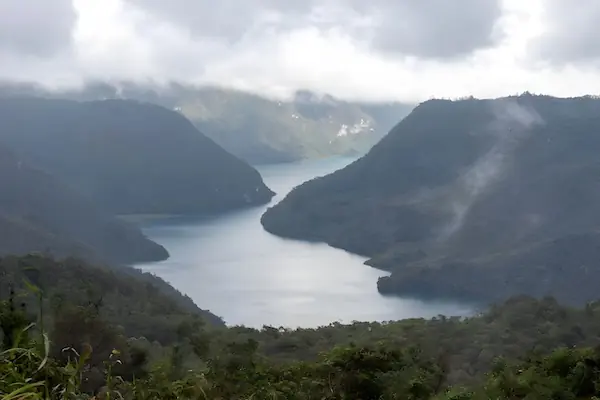
Highland hike, wild water, and hidden cenotes hidden in plain sight. Laguna Brava is a trip that’s earned, but not in a “tough hike” kind of way – more like a reward for being willing to go a bit off the beaten path. You’re heading into Guatemala’s western highlands where the air gets crisp and the landscape gets rugged, but in a quiet, laid-back way.
The hike itself is the main event – pine forest, open views, and those moments where the sound of your own footsteps is all you can hear. When the lagoon finally comes into view, it’s like it changes color before your eyes – milky turquoise one minute, deeper blue-green the next – especially when clouds drift in and the sun breaks through.
This part of the world is a limestone landscape, which is why you can combine the lagoon with nearby cenote-style water openings and caves. Talk about a highland water surprise. It’s a beautifully “undeveloped” day – fewer tourists, more stillness, and the feeling of being somewhere locals know and love but most travelers never stumble upon. Just don’t forget a light jacket, and bring your curiosity. The mountains here have a mood all their own.

add-on
This is the kind of thing people mention months later, because it’s one of those experiences that still feels a bit out of this world – even in retrospect. You take off over Petén, and watch the human impact just melt away. Farms disappear, towns vanish, and suddenly you’re looking out over an endless expanse of green forest – a canopy so dense, it’s like you’re seeing the world in a whole new way.
This flight isn’t just a way to get from A to B – it’s a whole new perspective. You see the scale of the lowlands in a way that’s just impossible to get on foot. Then you land and walk into El Mirador with a guide who knows just the right pace to take. You’ll explore the major ceremonial areas, and climb structures that feel more like natural hills than “pyramids” – but with a weird sense of scale and power that’s just hard to put into words.
La Danta, one of the biggest pyramidal structures on Earth by volume, is a real showstopper – and only gets more impressive when you realize just how much it’s still standing after all these years. El Mirador is even connected to the Preclassic era, which means you’re standing on the ground where a whole chapter of Maya history was written. You’ll still sweat, you’ll still hear the forest… but you won’t be stuck hiking to your first stone.

add-on
Cacao, coffee, cardamom, and a long, relaxing soak afterwards. Want a day that genuinely feels like a slice of real life? Farm El Cisne is that experience. It’s not some staged “farm tour” – it’s a working farm, plain and simple. You’re getting to step into the daily rhythm of the place, with people who know this land like the back of their hand.
They’ll show you how cacao grows, is harvested, fermented, and dried – how to take raw coffee beans and turn them into something special. And you’ll even get a taste of that moment when you crack open a freshly opened cacao pod. The best bits are the everyday moments, like that – not the polished-up souvenirs.
One detail that’ll surprise you is that cardamom isn’t just a Guatemalan story. You’ll see how it fits into the wider region’s agriculture scene, and there’s something quietly satisfying about connecting “that spice in your kitchen” to a real, honest-to-goodness plant in the ground. The day ends just right – with a long soak in nearby hot springs to soak away all the travel miles. Warm water, tired legs, and a sense of calm you don’t need to pay for.

add-on
Cobá is the perfect add-on if you’re after one more Mexican ruins fix. Cobá feels like a real, lived-in city – spread out under trees, connected by forest paths and ancient causeways that’ll take your breath away. You’ll roam the plaza groups and temple platforms at your own pace, sometimes by walking, sometimes by getting a local tricycle taxi if you want to save your legs and see more. It feels active, not posed.
What really gets people is how Cobá’s web of sacbeob – those raised white limestone roads – really shows the Maya were planners as much as builders. Some of these causeways are crazy long, and make you realize the Maya were connecting communities way back when.
And Cobá sits near some beautiful lagoons and wetlands, which explains why it ended up in this spot: water and movement routes mattered. If you love the “how did this place work, day-to-day?” Aside from archaeology, Cobá is a real gem – and a great extra chapter to add to your story.


